
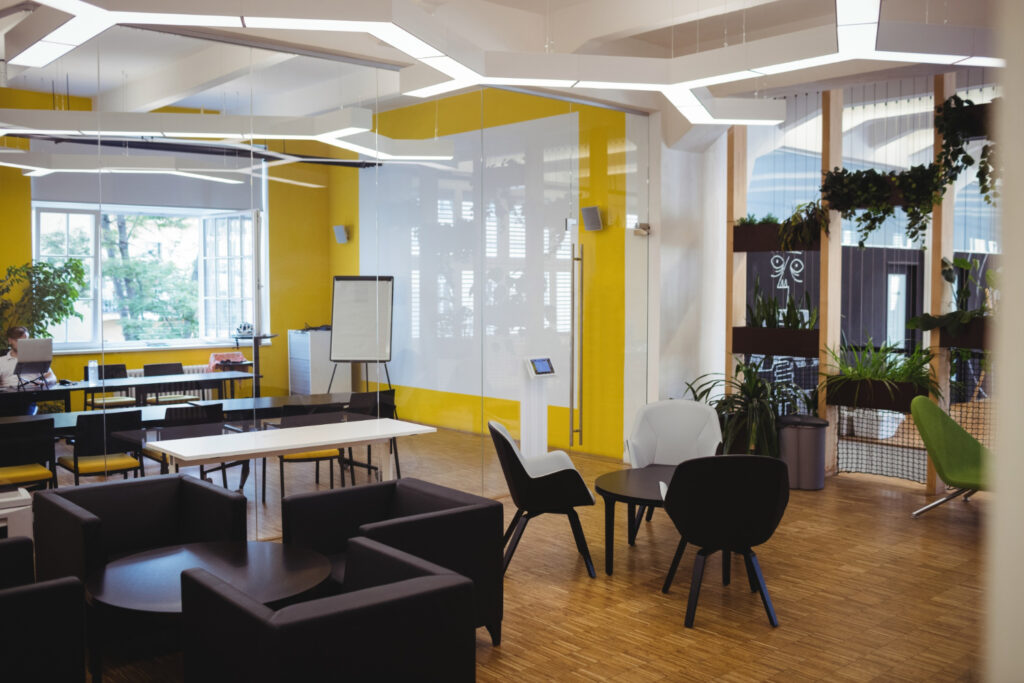
When discussing successful business, one cannot ignore the importance of office space and how it can impact an organisation. It’s not just about having a place to work; it’s about creating an environment that fosters productivity, wellbeing and positive company culture. If you’re wondering why office renovation matters, read on. This blog post will discuss some of the reasons why investing in your workspace can make all the difference.
The Evolution of Workplace Expectations
How people work has changed drastically in the last ten years. Employees have more expectations when it comes to their work environment. Rows of identical cubicles and harsh fluorescent lights are no longer acceptable. Employees want to work in places that allow them to be creative, collaborate with others and embrace different working styles.
Office refurbishment meets these demands by taking old, tired spaces and giving them a new life. When businesses understand the need to create an environment that their employees will enjoy coming into every day they are seen as progressive.
Hybrid working has increased the demand for well-designed offices. If employees can work from home then the office needs to give them a reason to come in. Reasons such as; dedicated spaces to collaborate with colleagues around software or simply relaxing spaces to build better relationships.
Boosting Employee Productivity and Wellbeing
One of the most compelling reasons why office renovation is important lies in its direct impact on employee productivity and wellbeing. The connection between workspace design and performance is well-documented, with research consistently showing that environmental factors significantly influence how people work.
Natural lighting, for instance, has been proven to enhance mood, reduce eye strain, and regulate circadian rhythms, leading to better sleep and increased alertness during working hours. A renovation project can maximise natural light through strategic window placement, glass partitions, and open-plan layouts that allow light to penetrate deeper into the workspace.
Temperature control and air quality also play vital roles in employee comfort and concentration. Modern HVAC systems installed during renovations can maintain optimal conditions throughout the year, reducing sick days and improving overall satisfaction. Poor air quality has been linked to decreased cognitive function, making ventilation improvements a worthwhile investment.
Ergonomic considerations are another critical aspect of office renovation. Incorporating adjustable desks, supportive seating, and properly positioned equipment can reduce the risk of musculoskeletal disorders and create a more comfortable working experience. When employees feel physically comfortable, they can focus their energy on their work rather than managing discomfort.
Maximising Space Efficiency and Functionality
Many businesses operate in offices that were designed decades ago, when work patterns and space requirements were entirely different. These outdated layouts often result in wasted square footage, inefficient workflows, and spaces that don’t serve current business needs.
Office renovation provides an opportunity to reassess how space is allocated and utilised. Through strategic space planning, businesses can create multifunctional areas that adapt to different needs throughout the day. What serves as a presentation space in the morning might transform into a social area during lunch and a quiet zone for focused work in the afternoon.
Key benefits of optimised space planning include:
- Reduction in overall property costs by maximising existing square footage
- Creation of dedicated zones for different work activities (collaboration, concentration, relaxation)
- Improved traffic flow and reduced congestion in common areas
- Better storage solutions that eliminate clutter and maintain organisation
- Flexible spaces that can evolve as business needs change
- Integration of technology infrastructure that supports modern working practices
The financial implications of space efficiency extend beyond the obvious. When businesses can accommodate growth or changing needs within their existing footprint, they avoid the significant costs and disruption associated with relocating to larger premises.
Strengthening Brand Identity and Company Culture
Every aspect of your office sends messages about your brand and your company culture. Take the walls down, carpet off the floor, and strip everything back; what does your office say about you?
Clients and customers visiting your office will instantly take note of how you’re presenting yourself. A refreshed and renovated office gives off the vibe that you care about quality. You want to give them the best experience possible, from your service to your space. This gives off an authentic impression that people notice and appreciate.
It’s not just how others view your office that matters; your workspace impacts your company culture internally, too. An open-plan office with accessible common spaces encourages collaboration. Breakout spaces show that you value those who need quiet to concentrate. Fun, cool ping pong tables and game rooms let your employees know that you care about their happiness.
Enhancing Health and Safety Standards
Building codes and safety standards change over time, and older office buildings may fall out of compliance. Updating your space during an office renovation is the perfect time to check in on health and safety standards. Fire prevention can be improved with modernized alarms and sprinkler systems, as well as properly mapped exits and flame-resistant materials. You should also consider ways to make your space more accessible to people with disabilities.
Not only is this required by law, but it’s the right thing to do. If anything, COVID-19 has taught us the importance of maintaining a clean and sanitary workspace. Installation of hands-free appliances and more thorough sanitation practices can go a long way. You may even consider improving the air filtration in your space or designing your office layout with social distancing in mind.
Modern safety considerations in office renovation include:
- Installation of advanced fire suppression and detection systems
- Improved emergency lighting and clearly marked exit routes
- Slip-resistant flooring in high-traffic areas
- Proper electrical installations that meet current regulations
- Accessibility features including ramps, lifts, and adapted facilities
- Enhanced security measures such as controlled access systems
Improving Energy Efficiency and Sustainability
Environmental responsibility has moved from a nice-to-have to an essential business consideration. Office renovation offers opportunities to significantly reduce energy consumption, lower operational costs, and minimise environmental impact.
Modern insulation, energy-efficient windows, and LED lighting can dramatically reduce heating, cooling, and electricity costs. Smart building systems that automatically adjust temperature and lighting based on occupancy ensure resources aren’t wasted on empty spaces. These improvements deliver immediate financial benefits whilst contributing to sustainability goals.
Sustainable renovation also addresses the growing expectations of employees, customers, and investors who increasingly favour environmentally conscious organisations. Achieving certifications such as BREEAM or LEED can enhance corporate reputation and demonstrate genuine commitment to environmental stewardship.
Water-saving fixtures, recycled building materials, and renewable energy integration are additional sustainability measures that can be incorporated during renovation projects. These initiatives not only reduce environmental footprint but often qualify for tax incentives or grants, improving return on investment.
How LB Group Helps Guide Your Office Renovation Journey
Office renovations can be a complex process that requires architects, designers, building control knowledge and project managers. At LB Group we take care of the full renovation process in London for offices.
We start by listening to your business requirements, issues with your current workplace, what you want from your office and your future goals. We then work with you to create a tailor-made plan for your business. We believe renovations should be purposeful to how you work not just for aesthetic purposes.
The LB Group office renovation team will take care of everything for you. We have architects that will design your new office space creating a design that’s functional and looks great. We will also manage the construction work ensuring it is done to the correct building control standards. Not having to deal with multiple teams and organisations can save you lots of time.
We understand that businesses need to stay open during office renovations. Our team will work around you to ensure your customers can still be served and your staff can still work. Whether that’s working at times when your office is closed or completing the renovation in stages.
Attracting and Retaining Top Talent
Attracting and keeping great staff is difficult when the job market is saturated. Skilled employees are choosier than ever before about where they want to work, and many are looking for great places to work.
Refreshing your offices shows current and potential employees that you care about their experience. It demonstrates that you value them and understand that the workspace affects their happiness and productivity. For employees of all ages but especially millennials, office design is just as important as compensation or career opportunities.
Employees are also less likely to look for new jobs when they love coming into work every day. If your office is a nice and comfortable place to be, employees are less likely to search for another job. With the high costs of hiring and training new employees, employee retention has tremendous returns.
Employees will also share their great work environment with their network. Whether it’s through word-of-mouth or social media, your employee’s will help you reach more potential candidates and build your brand organically.
Accommodating Technological Advancement
Technology evolves rapidly, and offices designed even five years ago may lack the infrastructure to support current tools and systems. Office renovation allows businesses to integrate modern technology seamlessly, ensuring workspaces support rather than hinder technological capabilities.
Robust IT infrastructure, including sufficient power outlets, data cabling, and wireless connectivity, forms the foundation of productive modern workspaces. Video conferencing facilities, collaborative display systems, and integrated communication platforms require proper planning and installation to function optimally.
Smart building technologies that control lighting, temperature, and security through centralised systems offer both convenience and efficiency. These systems can be monitored remotely, allowing facilities managers to identify and address issues proactively rather than reactively.
As businesses increasingly adopt cloud computing, Internet of Things devices, and artificial intelligence tools, the physical workspace must provide reliable connectivity and appropriate environmental conditions for this technology to function reliably.
Supporting Different Working Styles
Recognition that people work differently represents a fundamental shift in workplace design philosophy. Some individuals thrive in collaborative, social environments, whilst others produce their best work in quiet, solitary spaces. Effective office renovation accommodates this diversity.
Activity-based working environments provide various zones designed for specific tasks. Collaborative areas with comfortable seating and writable surfaces support group work and brainstorming. Quiet rooms or libraries offer sanctuary for concentration-demanding tasks. Phone booths or small meeting rooms provide privacy for confidential conversations.
This variety empowers employees to choose environments that suit their current tasks, increasing autonomy and enabling them to work in ways that maximise their effectiveness. Rather than forcing everyone into identical conditions, thoughtful renovation creates ecosystems that support diverse needs.
When LB Group undertakes office renovation projects, they prioritise this understanding of varied working styles, creating spaces that genuinely serve the people who use them daily. Their expertise in smart space planning ensures that different zones flow logically and function cohesively rather than feeling disconnected or fragmented.
Also Read: What Renovations Should I Do First?
Financial Implications and Return on Investment
Whilst office renovation requires upfront investment, the financial returns often significantly outweigh initial costs. Improved productivity alone can deliver substantial value—even modest percentage increases translate to meaningful revenue gains when multiplied across entire workforces.
Energy efficiency improvements reduce operational expenses year after year, with savings accumulating over the lifespan of installed systems. Many businesses discover that renovation costs are recovered within several years purely through reduced utility bills.
Enhanced employee retention reduces recruitment and training expenses, which can represent months of salary for each position that doesn’t need replacing. Similarly, attractive workspaces strengthen recruitment effectiveness, reducing time-to-hire and enabling businesses to secure top talent more efficiently.
Property values also benefit from high-quality renovations. Well-maintained, modern offices command higher sale or rental values, protecting and potentially increasing your property investment. This appreciation can offset renovation costs should you decide to relocate or dispose of the property in future.
Conclusion
Office renovation matters because it’s not just about aesthetics or following trends, it’s about smart business. When you renovate your office, you’re investing in your employees’ health and productivity, your brand image, compliance with regulations, and ultimately, your bottom line. As competition for top talent heats up and employee expectations shift rapidly, the workspace you provide can have a major impact on your organisation’s success.
Renovating your office is an investment in your business and the people who work there. It’s about creating an environment that will motivate your team, encourage collaboration, support different working styles and showcase your brand to employees and visitors alike. And the ROI you reap from a well-executed office renovation can continue to pay dividends long after the project is completed.
So whether you’re looking to solve a problem or future-proof your business, renovating your office space is one of the most impactful ways to ensure that both your people and your business can thrive.
Frequently Asked Questions
How long does a typical office renovation take?
Office renovation timelines vary considerably depending on project scope, office size, and complexity of works required. Minor cosmetic updates might be completed within a few weeks, whilst comprehensive renovations involving structural changes, mechanical and electrical upgrades, and full refurbishment could take several months.
Can we remain operational during office renovation?
Many businesses successfully maintain operations during renovation projects through careful planning and phased approaches. Contractors can work on different floors or sections sequentially, allowing teams to relocate temporarily within the building. Weekend or evening work schedules minimise disruption during peak business hours.
What return on investment can we expect from office renovation?
Return on investment varies based on renovation scope and business circumstances, but studies consistently demonstrate that well-executed office improvements deliver measurable benefits. Productivity increases of 5-15% are commonly reported following renovations that improve lighting, air quality, and workspace design. Energy efficiency upgrades typically reduce utility costs by 20-40%.
How do we determine what type of renovation our office needs?
Assessing renovation needs begins with evaluating current challenges and future objectives. Consider employee feedback about workspace pain points, review operational inefficiencies caused by layout or facilities, and examine how well your office supports your work patterns and company culture. Professional consultations, like those offered by LB Group, provide expert perspectives on opportunities you might not have identified independently.
What regulations must office renovations comply with?
Office renovations in the UK must comply with Building Regulations covering structural integrity, fire safety, accessibility, ventilation, and energy efficiency. Planning permission may be required for certain changes, particularly in listed buildings or conservation areas. Health and Safety at Work Act provisions apply throughout construction and to the finished workspace. Electrical and gas work must be completed by qualified professionals and certified appropriately.

Sunny Saini is a certified heating engineer with over 15 years of experience in maintaining and repairing boilers. He specializes in diagnosing complex boiler issues and providing reliable solutions to ensure homeowners stay warm and comfortable throughout the year.




![]=](https://localboiler.co.uk/wp-content/uploads/2024/05/Untitled-design-96-300x300.jpg)