
With heating bills on the rise and everyone wanting to be ‘green’, homeowners across the UK have been looking for ways to improve the energy efficiency of their properties. Cavity wall insulation is one of the best options, but what exactly is it? And how does it work? A lot of homeowners are unsure about cavity wall insulation. They don’t know what it entails or if it’s worth the money. Well that’s why we’ve decided to bring you a complete guide to cavity wall insulation.
Understanding Cavity Wall Construction
In order to understand cavity wall insulation let’s first take a look at how cavity walls are built. Cavity walls have been built as standard on UK homes since the 1920s. Prior to this time houses were built with solid walls.
The construction of a cavity wall is quite simple. The wall is made up of two leaves or skins with a cavity in between them. Normally these skins are made from brick or blockwork and historically the cavity between the walls would be around 50mm to 100mm wide. The cavity actually helps to stop moisture from penetrating from the outside skin of the wall to the inside wall. Water would run down the outside of the outer skin and exit through weep holes located at the bottom of the wall cavity. With cavity walls this problem was eliminated and soon everyone wanted them.
Although the cavity stopped damp getting through it did allow heat to escape from inside the house to outside via the wall. Heat would escape from the inner wall across the cavity and into the outer wall and from there it would be lost to the outside.
Insulation materials could be placed in the gap between the two skins and still allow the cavity to do its job of preventing damp. With that came the birth of cavity wall insulation.
What Exactly Is Cavity Wall Insulation?
Cavity wall insulation refers to filling the gap between the two leaves of a cavity wall with an insulating material. The insulation helps to form a barrier to heat loss through the walls of a property improving its energy efficiency.
Different types of materials are used for cavity wall insulation and vary in application, qualities and effectiveness. Common types include mineral wool, bead based (polystyrene beads), polyurethane foam and blown fibre. The type of insulation required depends on a variety of factors such as cavity wall thickness, condition of the walls, exposure to the elements and specific property needs.
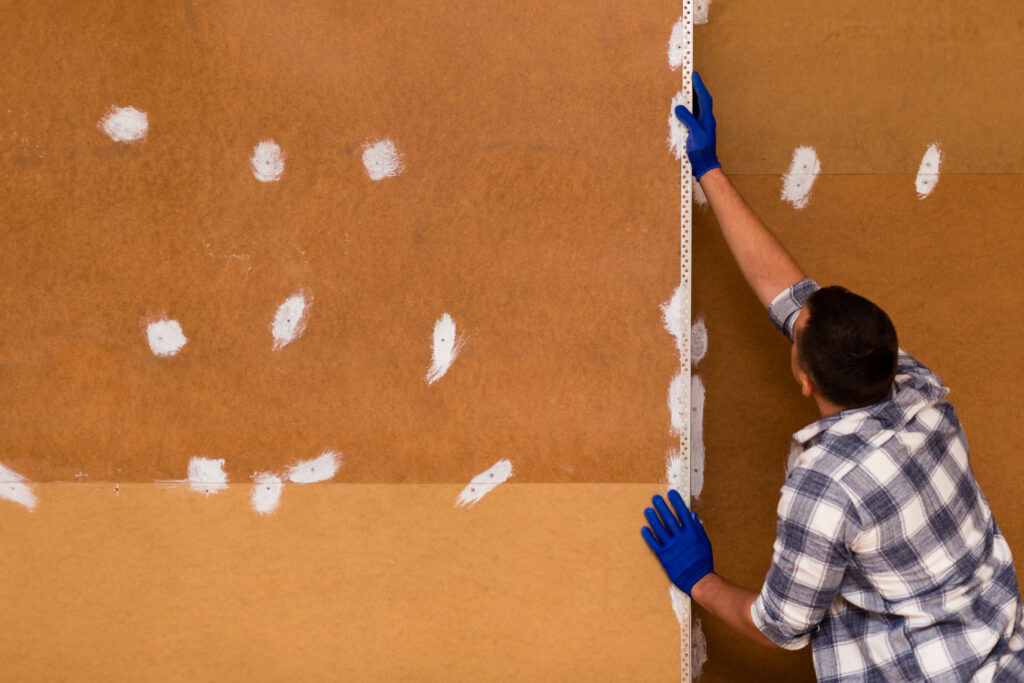
Cavity wall insulation is injected into place by drilling small holes, typically at regular intervals along the outer wall through the mortar rather than brickwork. Insulation materials are either injected or blown into the cavity using specialist equipment. Small cylinders are fitted into the holes to fill them back in and colour match the surrounding mortar after installation.
It is very important that cavity wall insulation is installed correctly, as it needs to fill the entire cavity evenly. If there are any gaps in the insulation material it can lead to cold spots within the cavity.
Types of Cavity Wall Insulation Materials
Understanding the different insulation materials available helps homeowners make informed decisions about which option best suits their property’s specific circumstances.
- Mineral wool consists of fine fibres made from rock or glass, spun into a wool-like material. It offers excellent thermal performance and fire resistance, whilst also providing some sound insulation benefits. Mineral wool is breathable, allowing moisture vapour to pass through, which helps prevent condensation issues within the cavity.
- Polystyrene beads are small, lightweight spheres mixed with adhesive before injection into the cavity. Once inside, the adhesive sets, bonding the beads together to create a stable insulating layer. This material performs well in narrower cavities and offers good thermal properties alongside moisture resistance.
- Polyurethane foam expands after injection, filling the cavity completely and creating an effective thermal barrier. It provides excellent insulation values and adheres to the cavity walls, creating a robust, long-lasting installation. However, it’s generally more expensive than other options and requires precise application by experienced installers.
- Blown fibre insulation uses recycled materials treated with fire retardants and water repellents. This environmentally friendly option offers good thermal performance and can be particularly suitable for properties where sustainability is a priority.
Each material has specific advantages, and professional installers can recommend the most appropriate option based on your property’s characteristics, exposure to weather, cavity width, and budget considerations.
The Science Behind Heat Loss and Insulation
To understand why cavity wall insulation is worth considering, it’s helpful to examine how heat loss occurs in residential properties. Heat naturally moves from warm areas to cooler ones, and in an uninsulated home, this means heat constantly flows from the warm interior towards the colder exterior.
In a typical uninsulated house, approximately 33% of heat loss occurs through the walls. This represents a substantial portion of the energy you’re paying to generate through your heating system. Every unit of heat escaping through your walls is money literally disappearing into the atmosphere.
Insulation works by creating resistance to heat flow. Materials with good insulating properties contain millions of tiny air pockets that trap air and prevent it from circulating. Since air is a poor conductor of heat, these trapped air pockets dramatically slow the rate at which heat can transfer through the wall.
The effectiveness of insulation is measured using U-values, which indicate how much heat passes through a material. Lower U-values represent better insulation, a typical uninsulated cavity wall might have a U-value of around 1.5 W/m²K, whilst the same wall with cavity insulation could achieve a U-value of approximately 0.3 W/m²K or better. This represents an improvement of roughly 80% in thermal performance.
When you reduce heat loss through walls, your heating system doesn’t need to work as hard or as long to maintain comfortable temperatures. This translates directly into reduced energy consumption and lower heating bills, whilst also decreasing your carbon footprint.
Financial Benefits and Cost Savings
One question we get asked time and time again is whether cavity wall insulation is worth it. For the majority of homes with cavities suitable for insulation the answer is yes.
Prices for installing cavity wall insulation vary from job to job but in general, you’re looking at around £500 – £1,500 for a typical three-bedroom semi. Prices differ based on the size of your property, accessibility and the material used for insulation. Although installing insulation will set you back a few hundred pounds initially, you’ll save enough money on energy bills to cover this cost in no time.
As an example, the Energy Saving Trust estimates that by having cavity wall insulation installed in an average semi-detached house with gas central heating you could save around £160-£255 per year. For a detached house, this could rise to around £280-£395 savings per year. Savings will depend on the size of your property, how well insulated it currently is and how efficient your heating system is.
Key financial advantages include:
- Significant reduction in annual heating bills, with savings accumulating year after year
- Payback period typically between 2-6 years, after which savings represent pure profit
- Reduced reliance on heating systems, potentially extending their lifespan
- Increased property value, as energy-efficient homes command premium prices
- Eligibility for government grants or schemes that may subsidise installation costs
- Protection against future energy price increases through reduced consumption
- Lower carbon emissions, contributing to environmental targets
Is Your Property Suitable for Cavity Wall Insulation?
Not all properties can accommodate cavity wall insulation, and understanding whether your home is suitable is crucial before proceeding. Several factors determine suitability, and professional assessment is essential to ensure safe, effective installation.
The condition of the cavity and walls is equally important. Cavities must be free from debris, rubble, or obstructions that could prevent even distribution of insulation material. The walls should be structurally sound, without significant cracks, deterioration, or existing damp problems. Installing insulation in walls with pre-existing damp issues can exacerbate problems rather than solve them.
Exposure to driving rain is another critical factor. Properties in exposed locations, particularly those facing prevailing winds or coastal areas, may be unsuitable for cavity wall insulation or may require special materials and techniques. In such situations, moisture could potentially bridge across the insulation, transferring damp from the outer to the inner wall.
Cavity width also matters—cavities narrower than 50mm are generally unsuitable for insulation, whilst unusually wide cavities might require specific materials or methods to ensure proper filling without excessive settlement.
Also Read: What Are the Essential Home Renovation Tips? (UK Homeowner’s Guide 2026)
How LB Group Guides Your Insulation Journey
Navigating the complexities of home improvement projects requires expertise that extends beyond basic installation skills. LB Group brings eight years of experience in home and office renovation, specialising in transforming standard spaces into exceptional, energy-efficient environments.
Their approach to cavity wall insulation begins with thorough property assessment. Understanding that every home is unique, they evaluate your specific circumstances, identifying whether cavity wall insulation is suitable and, if so, which materials and methods would deliver optimal results. This consultative process ensures recommendations are tailored to your property rather than applying generic solutions.
LB Group’s reputation, built on numerous 5-star reviews, reflects their commitment to merging functionality with quality and durability. Their expertise as specialists in building systems means they understand how insulation interacts with other property elements, including heating systems, ventilation, and moisture management. This holistic perspective prevents problems that can arise when insulation is considered in isolation.
Potential Drawbacks and Considerations
Whilst cavity wall insulation offers substantial benefits for most suitable properties, it’s important to acknowledge potential drawbacks and considerations to ensure balanced decision-making.
Installation quality is paramount—poorly executed cavity wall insulation can create problems rather than solve them. If insulation bridges the cavity in a way that creates pathways for moisture transfer, it could potentially introduce damp issues. This risk is minimised by using qualified, experienced installers who follow proper procedures and use appropriate materials for your property’s specific exposure and conditions.
In some cases, previously installed cavity wall insulation has failed or caused problems. This might occur due to inappropriate materials for the location, poor installation technique, or installation in unsuitable properties. If you’re considering a property that already has cavity wall insulation, it’s worth investigating when it was installed, by whom, and whether any guarantees or warranties remain valid.
Installation Process and What to Expect
Understanding what the installation process involves helps homeowners prepare appropriately and know what to expect on the day.
Before work begins, professional installers conduct a thorough survey, using borescopes to inspect the cavity’s condition and confirm suitability. They’ll identify the best positions for drilling access holes and plan the installation to ensure even coverage throughout the entire cavity.
On installation day, the process typically begins with protecting surrounding areas and setting up equipment. Small holes, usually about 22mm in diameter, are drilled through the outer wall at regular intervals, typically in mortar joints to maintain aesthetic appearance. The spacing depends on the chosen material and cavity characteristics but usually occurs at intervals of around one metre horizontally and vertically.
Specialised equipment then pumps or blows the insulation material into the cavity through these holes. Installers work systematically to ensure the cavity is completely filled, monitoring the process to prevent voids or gaps. The material distributes throughout the cavity, filling from bottom to top and ensuring even coverage.
Once the cavity is fully insulated, the access holes are carefully filled with mortar matched to the existing colour and texture. Skilled installers make these repairs virtually invisible, maintaining your property’s appearance.
The entire installation for a typical house usually takes just one day, creating minimal disruption to daily routines. There’s no need to vacate the property, and once work is complete, you can immediately start benefiting from improved thermal performance.
Combining Cavity Wall Insulation with Other Measures
Cavity wall insulation delivers impressive results independently, but combining it with other energy efficiency measures creates even greater savings and comfort improvements.
Loft insulation complements cavity wall insulation perfectly, as heat rises and significant energy escapes through poorly insulated roofs. Together, these measures can reduce total heat loss by over 50%, transforming energy efficiency and dramatically lowering bills.
Double or triple glazing windows further reduce heat loss, creating a comprehensively insulated thermal envelope around your property. Floor insulation, draught-proofing, and ventilation improvements complete the package, creating homes that are comfortable, efficient, and economical to run.
Approaching energy efficiency holistically, as LB Group does with their renovation projects, ensures all elements work together harmoniously rather than in isolation.
Conclusion: Making Your Decision
Cavity wall insulation represents one of the most cost-effective, impactful improvements available to UK homeowners with suitable properties. The combination of substantial energy savings, environmental benefits, improved comfort, and relatively quick payback periods makes it an attractive investment for most cavity wall homes.
The key to successful cavity wall insulation lies in proper assessment, quality materials, and professional installation. Not all properties are suitable, and attempting to insulate inappropriate homes can create problems. Equally, even suitable properties can experience issues if installation is poorly executed or inappropriate materials are used.
Working with experienced professionals who understand the complexities of cavity wall insulation ensures you receive honest assessment, appropriate recommendations, and quality installation that delivers promised benefits without unwanted complications. The expertise brought by specialists who understand how insulation interacts with other building elements protects your investment and ensures optimal outcomes.
As energy costs continue rising and environmental concerns intensify, cavity wall insulation’s value proposition strengthens further. The combination of lower bills, reduced carbon footprint, enhanced comfort, and increased property value makes it worth serious consideration for anyone with suitable cavity walls. By understanding what cavity wall insulation involves, how it works, and what to expect, you can make informed decisions that benefit your household finances, comfort, and the environment for decades to come.
Frequently Asked Questions
How long does cavity wall insulation last?
Cavity wall insulation is designed to last for the lifetime of the building, typically 40 years or more, without losing effectiveness. Modern materials don’t settle, compress, or deteriorate significantly under normal conditions. Most professional installations come with guarantees of 25 years or longer, providing assurance of long-term performance.
Will cavity wall insulation cause damp problems in my home?
When properly installed in suitable properties using appropriate materials, cavity wall insulation should not cause damp problems. Professional installers assess exposure to weather, check cavity condition, and select materials that maintain the wall’s ability to manage moisture. Problems typically only arise when insulation is installed in unsuitable properties, using inappropriate materials, or through poor installation technique.
Can cavity wall insulation be removed if problems occur?
Cavity wall insulation can be removed, though the process is expensive, disruptive, and time-consuming. Removal typically involves drilling numerous holes in the wall and using specialist extraction equipment to withdraw the material. The wall then requires extensive making and redecorating. Removal costs often significantly exceed original installation costs.
How much will cavity wall insulation actually save on my energy bills?
Savings vary depending on property size, construction, existing insulation levels, heating system type, and energy prices. The Energy Saving Trust estimates that a typical semi-detached house with gas central heating could save approximately £160-£255 annually, whilst detached properties might save £280-£395 per year. These figures represent substantial reductions that accumulate over time, typically recovering installation costs within 2-6 years.
Does cavity wall insulation work with all types of heating systems?
Cavity wall insulation benefits all heating systems by reducing the amount of energy required to maintain comfortable temperatures. Whether you use gas central heating, oil, electric storage heaters, heat pumps, or any other system, reducing heat loss through walls means your heating system works more efficiently.

Sunny Saini is a certified heating engineer with over 15 years of experience in maintaining and repairing boilers. He specializes in diagnosing complex boiler issues and providing reliable solutions to ensure homeowners stay warm and comfortable throughout the year.




![]=](https://localboiler.co.uk/wp-content/uploads/2024/05/Untitled-design-96-300x300.jpg)