
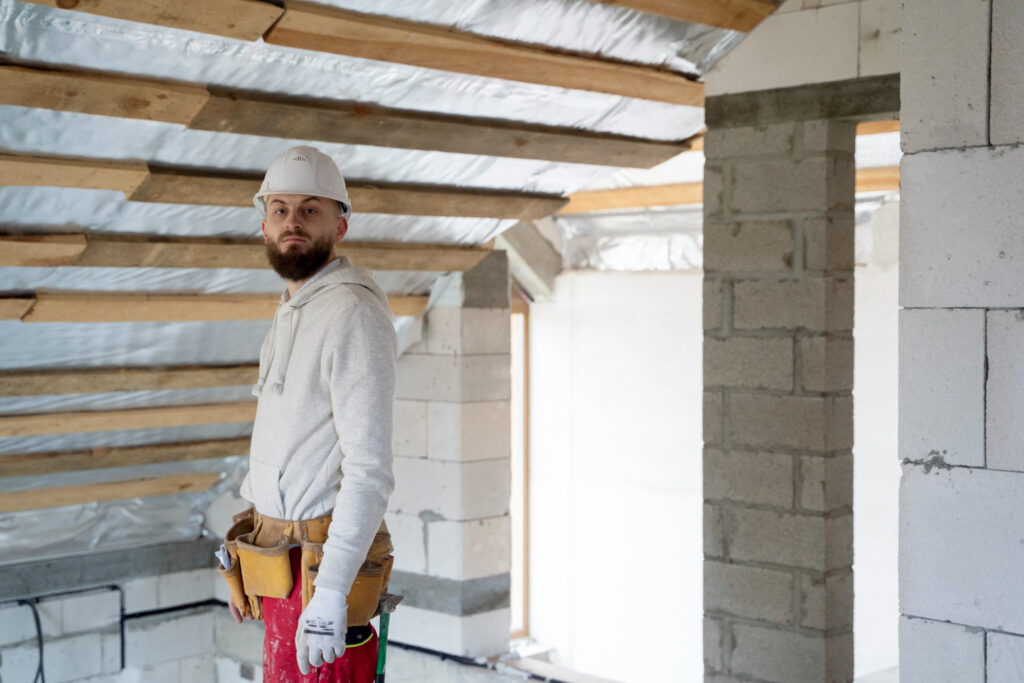
Had one of those cold British winters where you’ve received an astronomical energy bill and wondered if your house is losing all of its heat through the roof? Well it might be. A lot of houses in the UK do lose a lot of heat through inadequate loft insulation. This causes energy bills to spiral out of control and living conditions to become unbearable. The good news is that by having the right insulation installed in your loft, you could save a lot of money on your energy bills and feel comfortably at home all year round.
In this guide we cover everything you need to know about loft insulation costs. We look at different types of loft insulation, what affects cost and much more so you can make an informed decision.
Understanding Loft Insulation: Why It Matters
Ok but before I bombard you with statistics. Let’s talk about why loft insulation is important. Did you know that around 25% of heat lost in an uninsulated house is lost through the roofspace. That’s 25% of your costly heating bills disappearing up there. Into thin air… along with your hard earned cash.
Insulation in your loft stops heat transferring from your heated rooms into the cold air of your loft space. By doing this it helps keep that heat where you want it – inside your home. Not only will you be saving yourself some money, but you will also be reducing your carbon emissions. Insulation will help to make your home that little bit greener.
Breaking Down Loft Insulation Costs in the UK
The million-pound question (though thankfully, the actual cost is considerably less): how much will loft insulation actually set you back? The answer, as with most home improvement projects, is “it depends.” However, we can provide you with realistic figures based on current UK market rates.
Average Cost Ranges
DIY Installation:
- Materials only: £200–£500 for a typical three-bedroom semi-detached house
- Required tools and equipment: £50–£150 (if not already owned)
Professional Installation:
- Standard loft insulation (270mm depth): £400–£800
- Premium insulation with higher performance materials: £800–£1,500
- Difficult access or complex roof structures: £1,000–£2,000+
For most homeowners, professional installation of quality loft insulation for an average-sized property typically falls between £400 and £900, representing excellent value when you consider the long-term savings.
Factors That Influence Loft Insulation Costs
Understanding what drives the price variations can help you budget accurately and make informed decisions about your project.
Property Size and Loft Area
Perhaps unsurprisingly, the larger your loft space, the more materials you’ll need and the longer installation will take. A small terraced house might require half the materials and labour compared to a spacious detached property. Installers typically calculate costs per square metre, with prices ranging from £15 to £35 per square metre depending on the insulation type and thickness.
Type of Insulation Material
Different insulation materials come with varying price points and performance characteristics:
- Glass mineral wool (fibreglass): £10–£20 per square metre—the most common and cost-effective option
- Rock mineral wool: £15–£25 per square metre—similar to fibreglass but with better fire resistance
- Sheep’s wool: £20–£30 per square metre—eco-friendly and naturally moisture-resistant
- Multifoil insulation: £25–£40 per square metre—thinner profile, ideal for limited headroom
- Spray foam: £30–£50 per square metre—excellent coverage but requires professional installation
Existing Insulation Removal
If your loft already contains old, damaged, or insufficient insulation, removal costs can add £100–£300 to your project. However, in many cases, new insulation can be laid on top of existing materials (provided they’re in reasonable condition), potentially saving you money.
Loft Accessibility and Complexity
A straightforward, easily accessible loft with a simple roof structure will naturally cost less to insulate than one with awkward access points, numerous roof windows, or complex architectural features. If scaffolding or specialist access equipment is required, expect to add £200–£500 to the overall cost.
Types of Loft Insulation: Choosing What’s Right for You
Not all loft insulation is created equal, and the type you choose will significantly impact both the upfront cost and long-term performance.
Blanket or Roll Insulation
This is the most common DIY option, consisting of rolls of mineral wool, glass fibre, or sheep’s wool that you lay between and over the joists. It’s relatively inexpensive and straightforward to install, making it popular with homeowners looking to keep costs down.
Pros:
- Budget-friendly option
- Suitable for DIY installation
- Widely available at builders’ merchants
- Good thermal performance when properly installed
Cons:
- Can be tricky to fit around obstacles
- May compress over time, reducing effectiveness
- Requires careful handling (particularly fibreglass)
Loose-Fill Insulation
Made from materials like cellulose, mineral wool, or cork granules, loose-fill insulation is poured or blown into the loft space. This option is excellent for filling awkward gaps and irregular spaces.
Pros:
- Excellent coverage in hard-to-reach areas
- Quick professional installation
- Ideal for lofts with limited access
- Good for topping up existing insulation
Cons:
- Requires professional installation equipment
- Can shift over time if disturbed
- Not suitable for boarded lofts without additional measures
Rigid Insulation Boards
These solid panels, typically made from polyurethane or polyisocyanurate foam, offer excellent thermal performance in a relatively thin profile. They’re often used in combination with other insulation types or when headroom is limited.
Spray Foam Insulation
Applied as a liquid that expands and hardens, spray foam creates an airtight seal and provides excellent insulation. However, it’s the most expensive option and absolutely requires professional installation.
How LB Group Helps You Navigate Your Insulation Journey
When making decisions regarding your home, it is always worth seeking advice from someone who knows best. You will probably know LB Group for their top-notch boiler services and loft conversions offered all over London and Essex but what about when you’re considering loft insulation?
The LB Group have been in the business for 8 years and know a thing or two about insulation. They know that insulation isn’t a simple as some fibreglass wool being thrown into your loft and wished luck. Everyone dreams of a beautifully loft conversion and to insulate your loft correctly is key when doing this. Not only is loft insulation important when it comes to saving money on heating costs but it’s also essential for creating a comfortable and liveable space if you are converting your loft.
That’s where the guys at LB Group come in, they can advise you on how loft insulation can play a big or small role in your planned improvements. You may be thinking about installing loft insulation just to keep your home warm but having it blown will affect the performance of your home if you are going to insulate and convert your loft. When converted, your loft will become a room like any other and you should really adhere to the building regulations for loft performance. The team at LB Group can walk you through everything you need to know when applying for building control.
As experts in boilers and loft conversions, they know how important loft insulation is and how it can affect how your heating system operates. No one wants to spend money on heating their home and having poor loft insulation can cause your boiler to work harder than it needs to. Make sure you seek advice from the pros.
Potential Savings: The Return on Your Investment
Let’s talk about the part that really matters: how much money can proper loft insulation actually save you?
According to recent data from the Energy Saving Trust, installing loft insulation in a previously uninsulated home can save:
- Detached house: £355 per year
- Semi-detached house: £250 per year
- Mid-terrace house: £190 per year
- Bungalow: £285 per year
These figures are based on typical gas-heated homes with average energy usage. With current energy prices (and the unfortunate reality of regular price increases), these savings could be even more substantial.
Even if your loft already has some insulation, topping it up from 100mm to the recommended 270mm can still save you £20–£45 per year depending on your property type. Whilst this might seem modest, remember that loft insulation can last 40 years or more with minimal maintenance, meaning your initial investment continues paying dividends for decades.
Also Read: What Is Cavity Wall Insulation and Is It Worth It?
Government Grants and Financial Support
Before you reach for your wallet, it’s worth investigating whether you qualify for any government schemes or grants that could reduce your out-of-pocket costs.
ECO4 Scheme (Energy Company Obligation)
Running until 2026, the ECO4 scheme requires larger energy companies to help households improve their energy efficiency. If you receive certain benefits or have a low household income, you might qualify for fully funded or heavily subsidised loft insulation.
Local Authority Grants
Many councils offer their own energy efficiency schemes, sometimes in partnership with energy companies. These vary by location, so it’s worth checking with your local authority to see what’s available in your area.
Energy Supplier Offers
Some energy companies run their own schemes separate from ECO4, offering discounted or free insulation to their customers. It costs nothing to enquire, and you might be pleasantly surprised at what’s available.
Common Mistakes to Avoid
When budgeting for and installing loft insulation, watch out for these common pitfalls:
- Blocking ventilation: Proper ventilation is crucial to prevent condensation. Never block eaves vents or roof ventilation when installing insulation.
- Insufficient depth: Skimping on insulation depth to save money is a false economy. The recommended 270mm exists for good reason—less than this, and you won’t achieve optimal energy savings.
- Ignoring pipe protection: Water pipes in your loft should be insulated separately to prevent freezing once you’ve insulated the loft floor. This is a small additional cost but prevents potentially catastrophic burst pipes.
- Compressing the insulation: If you need to board over your insulation for storage, ensure you use spacers to prevent compression, which significantly reduces insulation effectiveness.
- Forgetting the hatch: The loft hatch itself needs insulation too! An uninsulated hatch can be a significant source of heat loss.
Final Thoughts: Is Loft Insulation Worth the Investment?
When you weigh up the relatively modest upfront cost against decades of energy savings, improved home comfort, reduced carbon emissions, and potential property value increase, loft insulation represents one of the most sensible home improvements you can make.
Whether you’re spending £400 on a straightforward DIY project or £1,500 on premium professional installation, the return on investment is compelling. Factor in the various grants and schemes that might be available to you, and the decision becomes even clearer.
Your loft might seem like a forgotten space, good only for storing Christmas decorations and accumulating dust, but it plays a crucial role in your home’s overall energy efficiency. By investing in proper insulation, you’re not just reducing your energy bills, you’re creating a more comfortable home, doing your bit for the environment, and making a smart financial decision that will benefit you for decades to come.
Remember, whether you’re simply looking to improve your home’s energy efficiency or planning a more extensive renovation, having knowledgeable guidance makes all the difference. The expertise available from established professionals can help ensure your investment delivers maximum returns whilst meeting all necessary standards and regulations.
Frequently Asked Questions About Loft Insulation Costs
1. How long does loft insulation last, and will I need to replace it?
Quality loft insulation can last 40 years or more without needing replacement. However, it’s worth checking every few years to ensure it hasn’t been disturbed, compressed, or damaged by water ingress. Topping up or replacing insulation is only necessary if it’s been compromised or if you’re upgrading to meet higher performance standards.
2. Can I install loft insulation myself to save money, and is it difficult?
Yes, you can install blanket-type loft insulation yourself if you have reasonable DIY skills and your loft is accessible. The job typically takes a weekend for an average-sized loft. However, you’ll need protective equipment (gloves, mask, goggles) and should follow manufacturer guidelines carefully. Some insulation types, particularly spray foam, must be installed by qualified professionals.
3. Will loft insulation affect my ability to use the loft for storage?
If you insulate between and over the joists (the recommended approach for unused lofts), walking on the insulation will compress it and reduce its effectiveness. If you need storage space, you’ll need to install raised boarding over the insulation or consider insulating between the rafters instead. LB Group can advise on the best approach if you’re planning a full loft conversion where the space will become a habitable room.
4. Are there any hidden costs I should budget for beyond the insulation itself?
Potentially, yes. You might need to budget for: loft boarding if you require storage space (£500–£1,500), improved loft hatch and ladder (£150–£400), separate pipe insulation (£20–£50), or remedial work if surveyors discover roof damage or pest infestations during installation. Always get a comprehensive quote that includes all necessary works.
5. How quickly will loft insulation pay for itself through energy bill savings?
For a typical professionally installed loft insulation project costing £600–£800 in a previously uninsulated semi-detached house, you could recoup your investment in approximately 3–4 years based on average savings of £250 per year. After that, it’s pure profit in your pocket. Even with smaller savings from topping up existing insulation, most installations pay for themselves within 10 years, then continue saving you money for decades.
Sunny Saini is a certified heating engineer with over 15 years of experience in maintaining and repairing boilers. He specializes in diagnosing complex boiler issues and providing reliable solutions to ensure homeowners stay warm and comfortable throughout the year.




![]=](https://localboiler.co.uk/wp-content/uploads/2024/05/Untitled-design-96-300x300.jpg)