
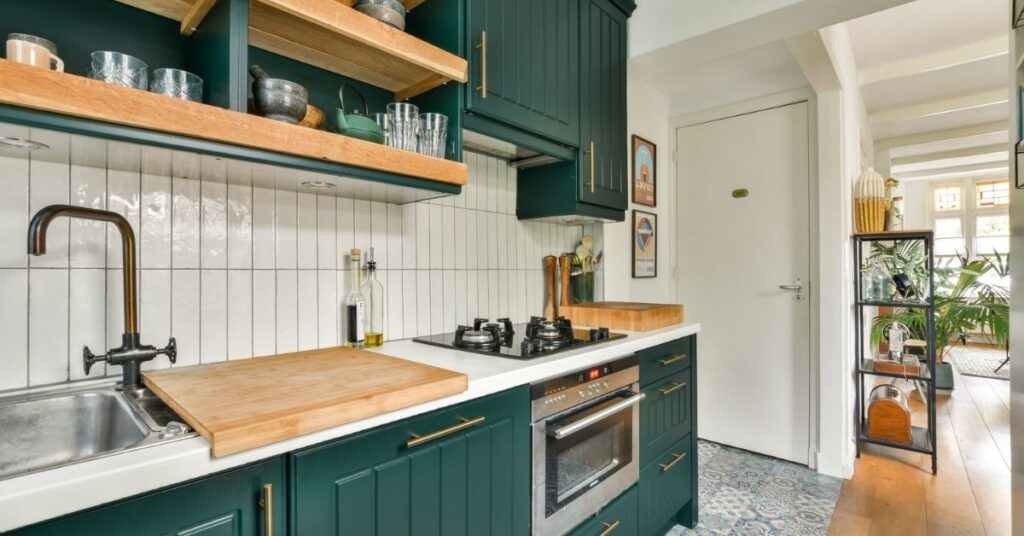
Style-wise, the Shaker kitchen is one of the few British kitchen designs which really does date back centuries. You see, long before people were using the word “Shaker” to describe a modern style kitchen, the word was actually the name of an 18th century religious sect in America. So what’s a Shaker style kitchen? And how can a style which started hundreds of years ago in America be one of the most popular in British kitchens today?
In this guide, we’ll go through everything you need to know about Shaker style kitchens to help you decide whether it’s the right choice for your home.
The Origins and History of Shaker Style
The Shaker style is named after the United Societies of Believers in Christ’s Second Appearing, more commonly known as the Shakers. This religious sect reached its peak in America in the late 18th and early 19th centuries. The Shakers believed in simplicity, utility, and honest craftsmanship. They made everything by hand and considered making well-crafted and useful items a form of worship. This mindset was reflected in their furniture and cabinetry, which they made to be durable and practical with no wasted material or unnecessary ornamentation.
Shaker style is characterised by its lack of embellishment and its emphasis on clean lines, quality materials, and functionality. Shaker cabinetry is known for its strong, simple construction, with the quality of the build often lasting for generations. Shaker style furniture and cabinetry are timeless and classic, and their simplicity and emphasis on quality construction and materials make them a popular choice for those looking for a high-quality kitchen that will stand the test of time.
Now, the Shaker sect only numbers a few dozen people, but their legacy of simplicity, quality, and craftsmanship continues to inspire designers and homeowners around the world.
Defining Characteristics of Shaker Style Kitchens
Understanding what makes a kitchen genuinely “Shaker” requires recognising several key design elements that work together to create this distinctive aesthetic:
Cabinet Door Design
The most recognisable feature of a Shaker kitchen is the cabinet door design. A traditional Shaker door consists of a flat centre panel framed by four pieces of wood—two vertical stiles and two horizontal rails. This five-piece construction creates a simple recessed panel that’s both elegant and understated. The frame is typically joined using mortise and tenon joints, reflecting the Shakers’ commitment to quality craftsmanship.
Minimal Ornamentation
Shaker kitchens eschew elaborate mouldings, carvings, or decorative flourishes. The beauty lies in the simplicity and proportion of the design itself. Hardware is typically understated simple knobs or handles in brushed metal finishes rather than ornate pulls or decorative fixtures.
Quality Materials
Authentic Shaker design emphasises natural materials, particularly wood. Traditional Shaker kitchens were crafted from locally available hardwoods like maple, cherry, or oak. Today’s Shaker-style kitchens often use painted finishes, but the underlying construction remains solid and well-made.
Functional Design
Every element in a Shaker kitchen serves a purpose. Storage solutions are practical and accessible, worktops are designed for efficiency, and the overall layout prioritises workflow. There’s no wasted space or purely decorative features—form follows function.
Neutral Colour Palettes
Whilst original Shaker furniture was often left in natural wood tones, modern Shaker kitchens frequently feature painted finishes in neutral colours. Classic choices include soft whites, gentle greys, sage greens, and muted blues. These colours enhance the sense of calm and simplicity that defines the style.
Why Shaker Style Kitchens Remain Popular
The enduring appeal of Shaker kitchens isn’t merely about nostalgia or tradition. Several practical and aesthetic factors contribute to their ongoing popularity in contemporary homes:
Timeless Versatility
Shaker kitchens possess a chameleon-like quality that allows them to complement virtually any home style. Whether your property is a Victorian terrace, an Edwardian semi-detached, a modern new-build, or a country cottage, a Shaker kitchen can be adapted to suit. This versatility makes them an excellent choice for homeowners concerned about their kitchen appearing dated in a few years.
The clean lines and simple design mean Shaker kitchens can be dressed up or down depending on your preferences. Pair them with marble worktops and brass fixtures for a luxurious feel, or combine them with butcher block counters and simple hardware for a more casual, farmhouse aesthetic.
Easy to Personalise
The simplicity of Shaker design provides an excellent canvas for personalisation. You can easily update the look of your kitchen by:
- Changing cabinet hardware
- Swapping out worktop materials
- Updating wall colours
- Adding or removing open shelving
- Incorporating different backsplash designs
- Adjusting lighting fixtures
This flexibility means your Shaker kitchen can evolve with your tastes without requiring a complete renovation.
Excellent Investment Value
From a property value perspective, Shaker kitchens are considered a safe and intelligent investment. Their broad appeal means they’re unlikely to put off potential buyers should you decide to sell your home. Estate agents consistently report that well-executed Shaker kitchens are among the most desirable features for house hunters across all price brackets.
Practical Maintenance
The flat surfaces and simple construction of Shaker cabinets make them remarkably easy to clean and maintain. There are no intricate carvings or detailed mouldings where grease and grime can accumulate. A simple wipe-down with appropriate cleaning products keeps Shaker cabinets looking pristine for years.
Modern Interpretations of Shaker Style
Whilst traditional Shaker kitchens adhered to strict design principles, contemporary interpretations allow for creative flexibility whilst maintaining the core aesthetic. Here are some popular modern approaches:
Painted Finishes
Today’s Shaker kitchens frequently feature painted cabinetry in an extensive range of colours. Whilst soft neutrals remain most popular, bolder choices like navy blue, forest green, or even charcoal grey are increasingly common. Some homeowners opt for two-tone designs, with island units in a contrasting colour to perimeter cabinets.
Mixed Materials
Modern Shaker kitchens often incorporate mixed materials for visual interest. You might see traditional painted Shaker doors on upper cabinets paired with natural wood finishes on lower units, or a combination of solid doors with glass-fronted cabinets for display purposes.
Contemporary Hardware
Whilst traditional Shaker kitchens featured simple wooden knobs, today’s versions might include sleek metal handles, leather pulls, or even handleless designs with push-to-open mechanisms for an ultra-modern twist.
Open Shelving Integration
Many contemporary Shaker kitchens incorporate open shelving alongside traditional cabinetry. This creates visual breathing space and provides opportunities to display attractive dishware, cookbooks, or decorative items.
Planning Your Shaker Style Kitchen
If you’re considering a Shaker style kitchen for your home, careful planning ensures you achieve the look you want whilst meeting your practical needs. Here are essential considerations:
Budget Considerations
Shaker kitchens are available across a wide price spectrum:
- Budget-friendly options: Ready-to-assemble flat-pack units with Shaker-style doors from major retailers
- Mid-range choices: Semi-custom cabinets from kitchen specialists with various finish options
- Premium selections: Bespoke, hand-crafted cabinetry using traditional joinery methods and premium materials
Your budget will influence material choices, construction quality, and customisation options, but beautiful Shaker kitchens can be achieved at various price points.
Layout and Space Planning
The Shaker philosophy of functional design makes these kitchens particularly well-suited to efficient space planning. Consider:
- The work triangle (the relationship between sink, cooker, and refrigerator)
- Storage needs and how to maximise cabinet efficiency
- Whether an island or peninsula would enhance functionality
- Traffic flow patterns through the kitchen
- Integration with adjacent living spaces
Choosing Your Colour Scheme
Selecting the right colours for your Shaker kitchen involves considering:
- The amount of natural light your kitchen receives
- The size of the space (lighter colours make small kitchens feel larger)
- Colours used in adjacent rooms for visual flow
- Your personal style preferences and how they might evolve
- The longevity of your colour choices (neutrals offer maximum flexibility)
Worktops and Backsplashes
The worktops and backsplash you choose will significantly impact your kitchen’s overall aesthetic:
- Worktops: Granite, quartz, marble, solid wood, and laminate all work beautifully with Shaker cabinets
- Backsplashes: Metro tiles are a classic pairing, but you might also consider natural stone, glass, or even painted walls for a more minimal look
How LB Group Helps You Achieve Your Perfect Shaker Kitchen
Building your dream kitchen takes skill, patience, and attention to detail. At LB Group, we have over eight years of experience working with domestic customers throughout Greater London and Essex, and we know that every home renovation project has challenges. A kitchen, in particular, requires an understanding of plumbing, as well as design, to make sure everything works in harmony. We specialise in Shaker kitchens, but your plumbing and electrics are just as important as your kitchen finish.
Our team has a vast array of skills when it comes to kitchen renovation and build. We know where plumbing should run, what heat you need, and how to install the necessary systems to make your dream kitchen a reality. If you have a new kitchen, your sink might need repositioning, and a new tap needs plumbing in. Similarly, if your new kitchen has more space, you might need additional radiators to heat it adequately.
We pride ourselves on the attention to detail that we bring to every job, and we’ll make sure that your new kitchen is as functional as it is aesthetically pleasing. We can also help with other Shaker kitchen projects, from plastering walls to plumbing your bathroom. Don’t be caught out by tricky building regulations, let the experts help.
Common Mistakes to Avoid with Shaker Kitchens
Even with a design as straightforward as Shaker style, certain pitfalls can compromise the final result:
Over-Accessorising
The temptation to add decorative elements can undermine the simplicity that makes Shaker kitchens so appealing. Resist the urge to add ornate mouldings, elaborate hardware, or excessive decorative details.
Ignoring Proportions
Shaker cabinet doors rely on proper proportions between the frame and centre panel. Poorly proportioned doors immediately look “off,” even if you can’t immediately identify why.
Choosing Inappropriate Hardware
Hardware that’s too ornate, oversized, or stylistically inconsistent can clash with the understated elegance of Shaker cabinets. Keep hardware simple and proportionate.
Neglecting Quality
The Shaker philosophy emphasises quality construction. Opting for poorly made cabinets with thin frames and flimsy doors contradicts the fundamental principles of the style. If budget constraints exist, it’s better to reduce the kitchen’s scope whilst maintaining quality than to compromise on construction standards.
Inadequate Planning for Services
Failing to properly plan for plumbing, electrical, and heating requirements can lead to compromised functionality and expensive corrections. Professional guidance ensures these essential systems are integrated seamlessly from the start.
Maintaining Your Shaker Style Kitchen
Proper maintenance ensures your Shaker kitchen remains beautiful for decades:
- Regular cleaning: Wipe surfaces with appropriate cleaners for your cabinet finish
- Immediate spill attention: Address spills quickly to prevent staining, especially on painted surfaces
- Hardware checks: Periodically tighten screws on handles and hinges
- Touch-ups: Keep paint or finish for minor repairs as needed
- Professional servicing: Have plumbing and heating systems checked regularly to maintain optimal function
Conclusion
Built to last and built with flexibility in mind, shaker style kitchens continue to be a favourite among homeowners old and new. Shaker kitchens retain their popularity today for several reasons. The main ones being, that they are just nice and have been since they were first established as a concept many years ago. Simple to understand in their values and priorities, shaker kitchens were constructed to be of good quality with simple lines that have practical use and consideration to them.
Transforming your old kitchen into a shaker kitchen or even a brand new kitchen fitted into your recently renovated house are both great reasons to contact professional kitchen fitters who can give you the build you know you will be proud to call your own for many years to come. Whichever project you are currently working on, we can help you to make it the one to outlast them all. Kitchens that are timeless in their elegance and ease of use that fit in with your life and your property.
Not all renovation work will go to plan, and often, the results are out of your hands. It is not enough for your kitchen to look great, but the fundamental work such as plumbing, heating, electrics, pipework, and structural integrity also has to be a cut above in order for you to have peace of mind and a beautiful new kitchen that will last.
Kitchens that are timeless in their elegance and ease of use that fit in with your life and your property.
Frequently Asked Questions
Are Shaker kitchens expensive?
Shaker kitchens are available across all price ranges. You can find affordable ready-to-assemble options from major retailers or invest in premium bespoke cabinetry. The cost depends on materials, construction quality, size, and whether you choose standard or custom solutions. Generally, Shaker style doesn’t inherently cost more than other kitchen styles at equivalent quality levels.
Do Shaker kitchens go out of style?
Shaker kitchens have remained popular for over two centuries, demonstrating remarkable staying power. Their timeless simplicity and versatility mean they adapt well to changing trends without appearing dated. Whilst specific colours or hardware choices may evolve, the fundamental Shaker aesthetic remains consistently appealing across generations.
Can Shaker kitchens work in small spaces?
Absolutely. Shaker kitchens are particularly well-suited to smaller spaces because their clean lines and lack of ornate details prevent visual clutter. Light colours enhance this effect further, making small kitchens feel more spacious. The functional design philosophy also ensures efficient use of available space.
What’s the difference between Shaker and traditional kitchens?
Whilst both can appear classic, Shaker kitchens are defined by their specific five-piece door construction, minimal ornamentation, and emphasis on simplicity. Traditional kitchens often feature more elaborate details, raised panels, decorative mouldings, and ornate hardware. Shaker style is a subset of traditional design, but with distinctive characteristics that set it apart.
How long does it take to install a Shaker kitchen?
Installation timelines vary considerably based on kitchen size, complexity, and whether you’re doing a complete renovation or simply replacing cabinetry. A straightforward cabinet replacement might take one to two weeks, whilst a full renovation involving plumbing, electrical work, and structural changes could take four to eight weeks or longer. Working with experienced professionals like LB Group helps ensure projects progress efficiently whilst maintaining quality standards.

Sunny Saini is a certified heating engineer with over 15 years of experience in maintaining and repairing boilers. He specializes in diagnosing complex boiler issues and providing reliable solutions to ensure homeowners stay warm and comfortable throughout the year.




![]=](https://localboiler.co.uk/wp-content/uploads/2024/05/Untitled-design-96-300x300.jpg)